




Connecting with the Logistics and Intralogistics Community
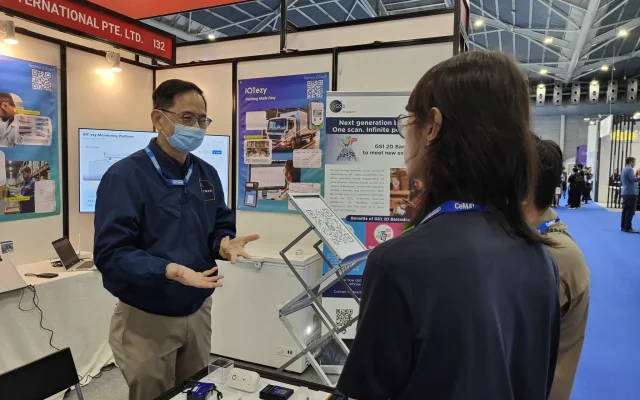
Metropolitan Wireless International (MWI) was pleased to participate in CeMAT South East Asia 2026, held from 12 to 14 May 2026 at Singapore EXPO.
As one of the region’s key events for intralogistics, warehousing, supply chain management, materials handling, robotics and automation, CeMAT SEA brought together technology providers and logistics professionals to explore how technology is transforming the way goods are stored, moved and managed.
For MWI, the event provided an opportunity to connect with the broader logistics ecosystem and explore where IoT and real-time monitoring can play a role in the next generation of logistics operations.
While much of the conversation around logistics focuses on automation, robotics and warehouse efficiency, there is another critical area that deserves attention: cold chain logistics.
Looking Beyond Intralogistics: The Cold Chain Challenge
Not every product moving through a warehouse or logistics network can simply be stored and transported under normal conditions.
Food, pharmaceuticals, vaccines, biotechnology materials and other temperature-sensitive products require controlled environments throughout their journey.
This introduces an additional layer of complexity to logistics operations.
A warehouse can have highly automated storage and retrieval systems, sophisticated inventory management software and efficient material handling processes. But if temperature-sensitive goods are exposed to unsuitable conditions, the efficiency of the rest of the operation may not matter.
For cold chain operators, maintaining the right environmental conditions is therefore just as important as moving products efficiently.
This is where IoT monitoring can complement the broader logistics technology ecosystem.
Why Real-Time Visibility Matters in Cold Chain
Traditional temperature monitoring often relies on manual checks and periodic data recording.
While this can provide a record of conditions at specific points in time, it may not provide continuous visibility.
Cold chain environments are dynamic. Temperature can change because of equipment failures, power interruptions, doors being left open, refrigeration issues or other operational events.
The longer an abnormal condition goes unnoticed, the greater the potential impact.
IoT monitoring introduces a more proactive approach by continuously collecting data from sensors and making that information accessible remotely.
With real-time monitoring, logistics operators can gain greater visibility over temperature-controlled environments and receive alerts when conditions move outside predefined limits.
Instead of discovering a problem during the next scheduled inspection, teams can be notified when the problem occurs.
From Warehouse Automation to Cold Chain Intelligence
One of the key takeaways from CeMAT SEA 2026 was the increasing role of technology in creating more connected logistics operations.
Automation and robotics can help move goods more efficiently.
Warehouse management systems can improve inventory visibility.
Digital supply chain platforms can improve coordination.
IoT monitoring adds another layer: visibility into the physical conditions surrounding the goods themselves.
This is particularly important for cold chain logistics.
For temperature-sensitive products, knowing where an item is may not be enough.
Operators may also need to know:
- What temperature is the product being stored at?
- Has the temperature remained within the required range?
- Has a refrigeration unit experienced an issue?
- Has a cold room door been left open?
- Has there been a power interruption?
- Can historical temperature data be retrieved when required?
Connecting this operational data can help logistics organisations build a more complete picture of their cold chain.
IoT Monitoring Across Cold Storage Operations
Cold chain monitoring can be applied across different points of the logistics process.
For example, IoT sensors can be used to monitor:
Cold Rooms and Warehouses
Monitor temperatures within refrigerated and frozen storage areas continuously.
Refrigerators and Freezers
Track the operating conditions of individual refrigeration units containing temperature-sensitive goods.
Distribution Centres
Gain centralised visibility across multiple temperature-controlled areas within a logistics facility.
Temperature-Sensitive Assets
Monitor environmental conditions around products and materials that require controlled storage.
Critical Infrastructure
Depending on the application, IoT monitoring can also extend to parameters such as power status and other operational conditions.
By connecting these monitoring points to a cloud-based platform, logistics teams can access information remotely rather than relying entirely on physical inspections.
Turning Data into Action
The value of IoT monitoring is not simply in collecting temperature readings.
The real value comes from turning those readings into information that people can act on.
A typical cold chain monitoring workflow can be as simple as:
Monitor → Detect → Alert → Respond
Sensors continuously collect data.
The monitoring platform identifies abnormal conditions.
Alerts are sent to the relevant personnel.
The team can then investigate and take appropriate action.
This approach can help reduce the time between an incident occurring and someone becoming aware of it.
For cold chain operators, that response time can be critical.
Supporting a More Resilient Cold Chain
Modern logistics networks are becoming increasingly complex.
Products may pass through multiple warehouses, distribution centres and transportation stages before reaching their final destination.
Every additional touchpoint introduces another opportunity for something to go wrong.
For temperature-sensitive products, maintaining visibility across these touchpoints is therefore an important part of building a resilient cold chain.
IoT monitoring can help organisations identify temperature excursions earlier, maintain historical records and gain greater visibility over distributed facilities.
Combined with other logistics technologies, this creates an opportunity to build supply chains that are not only more automated, but also more visible, responsive and resilient.
What We Took Away from CeMAT South East Asia 2026
Our participation in CeMAT SEA 2026 gave the MWI team valuable exposure to the latest developments across the logistics and intralogistics landscape.
The event reinforced how quickly logistics is evolving through automation, robotics, digitalisation and connected technologies.
It also highlighted an important opportunity for IoT.
As logistics operations become increasingly automated, monitoring the physical environment in which goods are stored and handled becomes increasingly important.
For cold chain operators, this means looking beyond simply moving products efficiently and considering how technology can help maintain the conditions those products require.
From Logistics to Cold Chain
At MWI, we see cold chain monitoring as a specialised area within the broader logistics technology landscape.
Our IoT monitoring solutions are designed to help organisations gain real-time visibility over temperature and other critical operational conditions.
Through our IOT-ezy platform, organisations can connect wireless sensors to a cloud-based monitoring system and receive alerts when monitored conditions move outside configured thresholds.
This allows cold chain operators to take a more proactive approach to protecting temperature-sensitive inventory.
Thank You for Connecting with MWI
We would like to thank everyone who connected with the MWI team during CeMAT South East Asia 2026.
The event was an excellent opportunity to meet logistics professionals, technology providers and industry stakeholders and to better understand the challenges facing modern supply chains.
We appreciated the opportunity to exchange ideas around automation, digitalisation, IoT and the future of logistics.
Most importantly, the event reinforced our belief that the future of logistics is not only about moving goods faster — it is also about having better visibility over the conditions in which those goods are stored and transported.
Looking Ahead
As logistics networks become more connected, cold chain monitoring represents an increasingly important niche within the wider logistics ecosystem.
MWI looks forward to continuing to explore how wireless and IoT technologies can support cold chain operators, warehouses, distribution centres and other temperature-sensitive logistics environments.
From real-time temperature monitoring and automated data logging to alerts and remote visibility, IoT can provide an additional layer of intelligence to modern cold chain operations.
CeMAT SEA 2026 may have focused on the future of intralogistics, but for MWI, it also highlighted an important opportunity within that future: making cold chain logistics smarter, more connected and more resilient.
Other Blogs
Food Storage
Medical Storage
IT Equipment
Server room temperature & humidity monitoring